Vehicle types, from executive car to full-size coach
Partner operators supply six classes of vehicle, from a three-passenger executive car to a 57-seat coach. Choose on passengers and luggage first, then on where the vehicle has to go.
Headcount and luggage
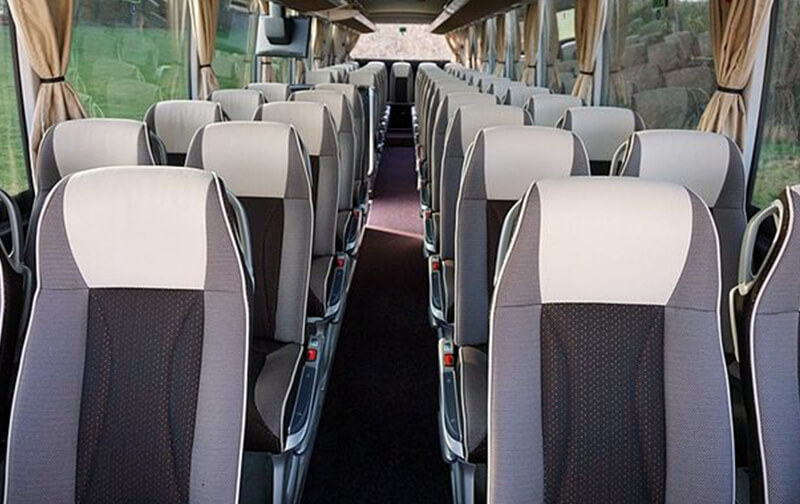
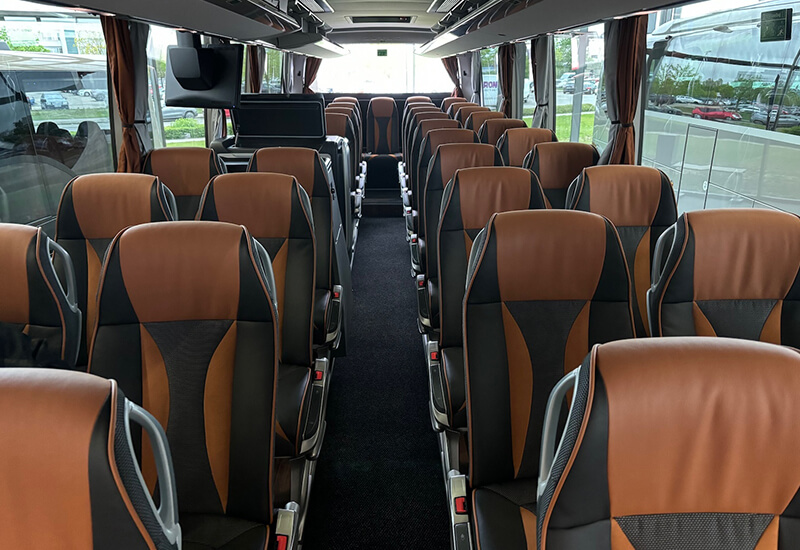
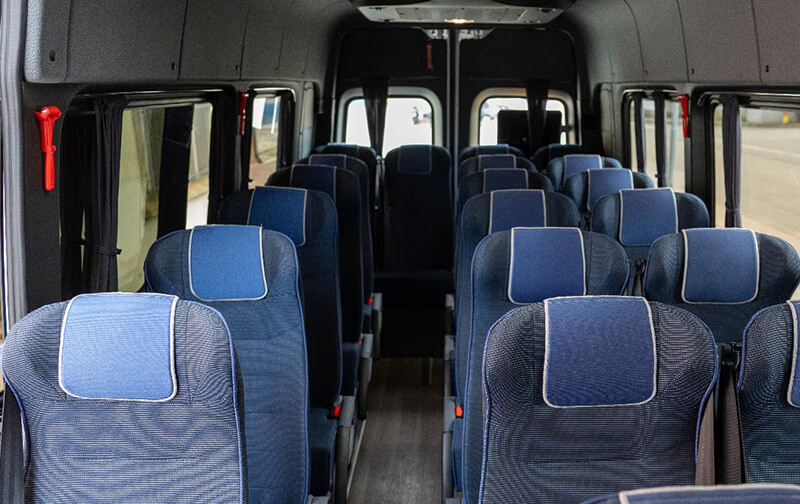
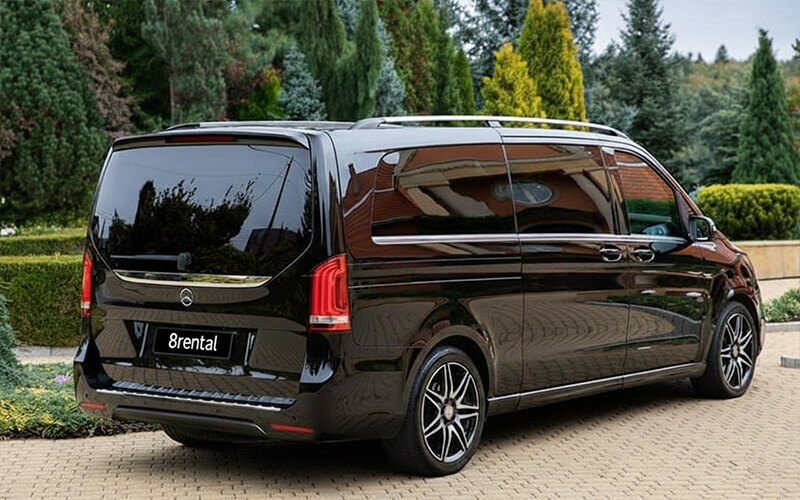
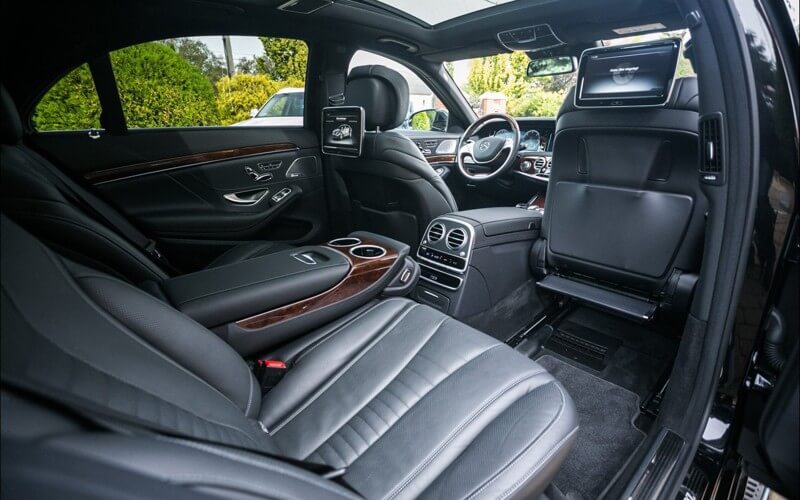
Executive car: one to three passengers, around 540 litres of boot on a non-hybrid E-Class. Executive van: up to eight, with less luggage room when every seat row is in use. Minibus: 16-19 seats and about 2 m3 at the rear. Midi coach: 29-35. Coach: 49-57, with about 12 m3 underfloor on a 13 m Tourismo. Accessible minibus: 10-16 seats plus wheelchair spaces, which cut luggage room.
Size against city rules
A midi coach is easier to handle in historic centres than a 12-14 m coach. Thresholds matter: Barcelona's Zona Bus starts at nine seats including the driver, Amsterdam's S100 rule at 7.5 tonnes, and Berlin Brandenburg's terminal kerbs stop at 3.5 tonnes.
Questions
Which vehicle suits 20 people with suitcases?
A midi coach, which has underfloor bays; a 16-19 seat minibus is tight for luggage at that headcount.
Does a minibus need a tachograph?
Yes, when it has more than nine seats including the driver.
How many wheelchair spaces does the accessible minibus have?
It varies by configuration; one Sprinter layout has 10+1 seats plus one wheelchair space. State the number needed in the brief.
Vehicle classes
- Full-size coach — 49-57 seats
- Midi coach — 29-35 seats
- Minibus — 16-19 seats
- Executive van (Mercedes V-Class / Sprinter class) — up to 8 seats
- Executive car (E-Class sedan class) — 1-3 seats
- Wheelchair-accessible minibus — 10-16 plus wheelchair spaces seats
Size the vehicle
Give headcount, bags and route, and the operator proposes the class.
Request a quote or call 442046529800